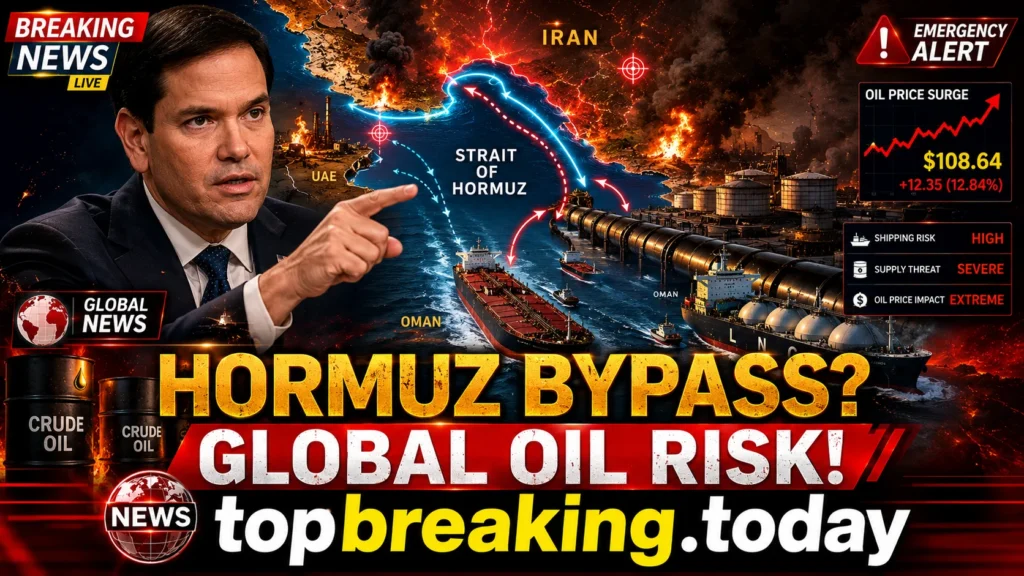
US Secretary of State Marco Rubio has suggested that the world should gradually reduce its dependence on the Strait of Hormuz, one of the world’s most important energy shipping routes, amid rising tensions in the Middle East.
Rubio believes countries should expand alternative oil and gas transport routes to reduce the risk of future disruptions. However, energy experts say replacing the Strait of Hormuz is far more difficult than it sounds.
Around 20% of the world’s seaborne oil and a large share of global LNG exports normally pass through the narrow waterway. Existing pipelines in Saudi Arabia and the UAE can only handle a fraction of that volume, making a complete bypass impossible in the near future.
Experts also warn that shifting energy supplies to overland pipelines creates new security risks, as pipelines can become targets for drone and missile attacks. In addition, alternative routes through the Red Sea face threats from regional conflicts.
While governments continue exploring new energy corridors, analysts say the Strait of Hormuz will remain a critical gateway for global oil and gas supplies for years to come.