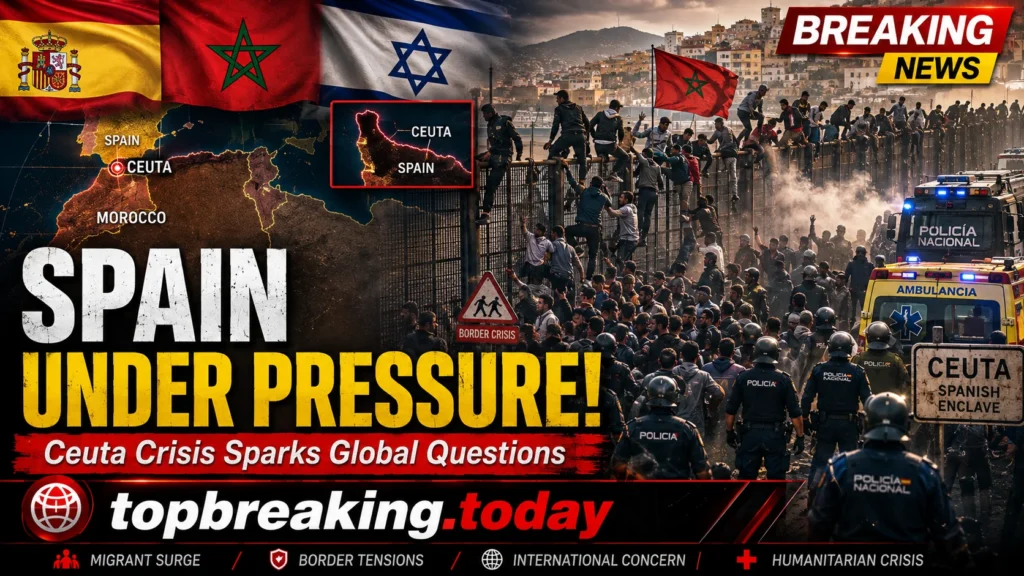
Spain is facing growing political pressure after a deadly migrant crisis in Ceuta, where at least 57 people lost their lives while attempting to cross from Morocco. Within just 24 hours, tens of thousands of migrants entered the Spanish enclave, prompting Prime Minister Pedro Sánchez to declare it a violation of Spain’s territorial integrity.
The crisis has quickly turned into a geopolitical debate. Israel’s UN ambassador Danny Danon accused Spain of hypocrisy over Ceuta while criticizing Madrid’s recent pro-Palestine stance. Spain has recognized Palestine, described Israel’s actions in Gaza as genocide, and suspended several arms deals with Israel.
Speculation has also emerged that the migrant surge could be linked to Spain’s worsening relations with Israel. Some pro-Israel commentators had previously suggested supporting Morocco’s claim over Ceuta and Melilla, arguing it would pressure Spain after it opposed parts of the US-Israel military strategy earlier this year.
No evidence has confirmed Israeli involvement in the Ceuta events, but the controversy has intensified diplomatic tensions. Meanwhile, former US President Donald Trump used the incident to criticize Spain’s immigration policies and warn about border security in the United States.
The Ceuta crisis has now become more than a migration issue, raising broader questions about international politics, regional alliances, and growing tensions in the Mediterranean.